
Scandals & Feuds · 1960s
The Fix That Was Never Proven
The Saturday Evening Post accused Wally Butts of conspiring to rig a 1962 game. His libel suit produced a reduced judgment and helped extend constitutional defamation protections to public figures.
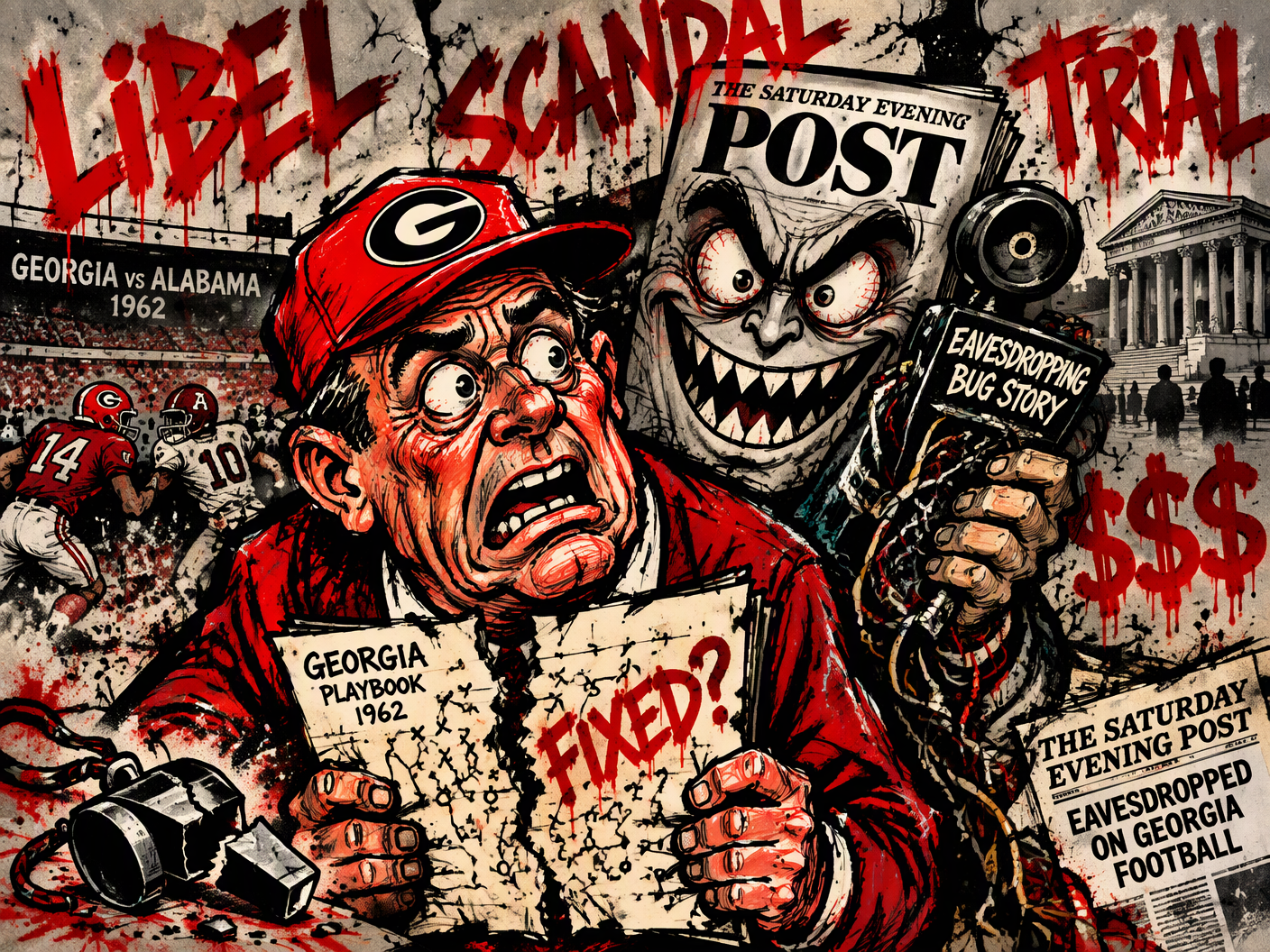
The Saturday Evening Post accused Wally Butts and Paul W. “Bear” Bryant of conspiring to “fix” the 1962 Georgia-Alabama game. It was an allegation as published by the magazine, not an adjudicated finding that the game had been fixed. Butts sued The Saturday Evening Post for libel, turning a football accusation into a dispute over editorial responsibility, money, and institutional power.
The article’s central source was George Burnett, who said he had accidentally overheard a telephone conversation between Butts and Bryant because of an electronic error. That account supplied the magazine’s asserted mechanism for learning what the coaches allegedly discussed. The question in court was not simply what the article claimed, but whether the investigation behind it could support such an accusation.
The scandal carried a professional cost for Butts. He lost his job as a result of it. After resigning as Georgia’s head coach, he remained athletic director, but the Georgia Encyclopedia described the remainder of his tenure as marred by scandal. The published accusation thus reshaped his position even though the underlying claim was never established as a proven game-fixing fact.
The jury returned general and punitive damages for Butts, and the trial court later reduced the judgment by remittitur to $460,000. The amount changed; the institutional question did not. The case continued to measure the magazine’s responsibility for publishing the allegation, rather than adjudicating whether the 1962 game itself had been fixed.
When the Supreme Court decided Curtis Publishing Co. v. Butts in 1967, it held that public figures, not only public officials, could be required to meet a higher constitutional showing in defamation actions. The Court’s syllabus said the jury found the article’s investigation grossly inadequate and that the evidence supported highly unreasonable conduct. Butts worked for the Georgia Athletic Association, a private corporation rather than the State itself, yet the case still extended the constitutional framework to public figures. The judgment that remained was $460,000.
Investigative Dossier & Evidence
Read the companion investigation notes, verified source claims, and primary documents.
Read the Companion Notes & Evidence Record →