
Scandals & Feuds · 2010s
Taichung Lost the 2019 East Asian Youth Games After Taiwan Naming Dispute
Taichung was chosen in 2014 to host the inaugural East Asian Youth Games and began formal preparations for an international multi-sport event. Four years later, after a dispute over Taiwan’s Olympic naming escalated, the East Asian Olympic Committee voted to remove the city as host.
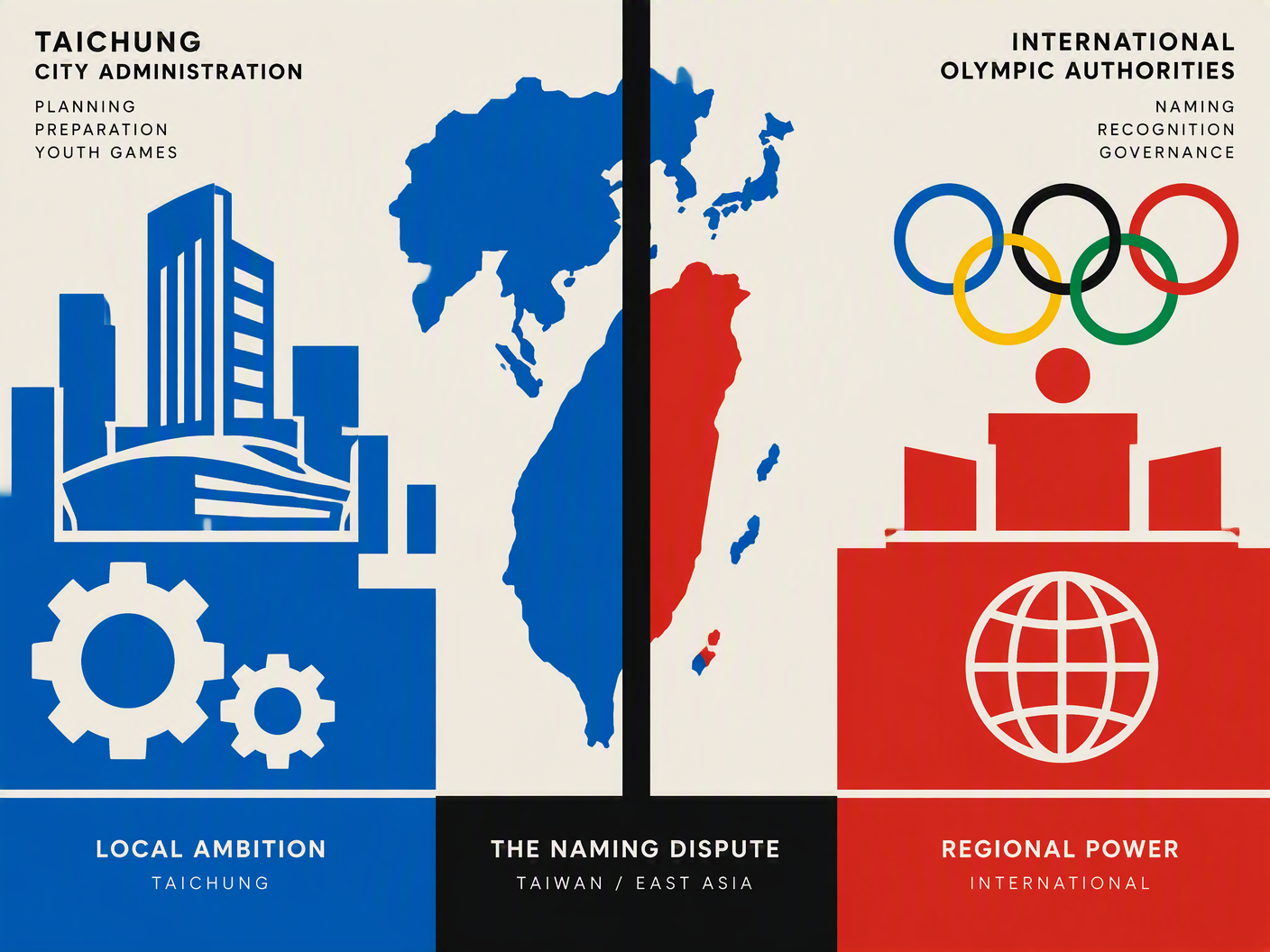
Taichung had already moved from ambition to administration when the event disappeared. The city had pursued the right to host the first East Asian Youth Games, secured the designation in 2014, and begun organizing the international multi-sport program that was supposed to arrive in 2019. Municipal officials had converted a sporting promise into offices, plans, and an organizing structure. On July 31, 2018, that work encountered the authority of a regional Olympic body. The East Asian Olympic Committee voted to strip Taichung of the hosting rights, turning a city project into a canceled event.
The story began on October 24, 2014, in Beijing, where the East Asian Games Association formally announced Taichung as host city for the first East Asian Youth Games. The designation gave the Taiwanese city responsibility for an event involving young athletes from across East Asia and placed its public institutions inside a regional sporting system shaped by political sensitivities. Taichung was not merely proposing facilities or presenting a bid. It had been selected to receive the competition, and the 2019 edition was attached to the city’s civic calendar.
For Taichung, hosting meant more than printing a logo or reserving dates. An international multi-sport event requires venues, schedules, transportation, accommodation, staffing, ceremonies, and the ordinary municipal work that allows athletes to move through a city. The event’s planned scale made the host designation an administrative commitment. A successful bid placed costs and responsibilities with the city government while giving a regional sporting association the power to define the event’s status. That division would later matter: Taichung could prepare, but it could not guarantee that the Games would remain its own.
On June 26, 2015, the Taichung City Government established the 2019 East Asian Youth Games Organization Committee. The committee marked the point at which the award became a working obligation. Officials were no longer dealing only with the language of a successful bid; they were building an institution around a future event. Staff, planning documents, venue arrangements, and public expectations would now develop under the assumption that athletes would arrive in 2019. The city had accepted the practical burden that followed the announcement in Beijing.
That planning phase also exposed the unequal character of international sports authority. The city government carried the visible work of preparation, but the regional bodies retained control over recognition and permission. Taichung could establish an organization committee and plan a multi-sport program; the East Asian Olympic Committee could later decide whether the city would host at all. The arrangement was not unusual in international competition, where local governments absorb financial and administrative obligations while governing bodies preserve the final word over names, symbols, and political boundaries.
The dispute centered on Taiwan’s Olympic naming. Taiwan competes in the Olympic system under a designation different from the name used by its government and many of its residents, a compromise embedded in the politics of international recognition. The question was not separate from sport. It concerned the label under which athletes would appear, the authority that could approve that label, and the political meaning attached to a youth event carrying the region’s name. As the naming controversy intensified, Taichung’s hosting role became entangled with a dispute larger than its venues.
For the city’s planners, the controversy arrived after the institutional work had begun. The organizing committee had been created in 2015 for a 2019 event, and the host designation remained the foundation of its preparations. Yet the political dispute changed the conditions under which that designation was being judged. A city could be ready to provide courts, fields, schedules, and accommodations and still lose the event if the regional sporting authorities concluded that the surrounding naming conflict had made the host unacceptable.
The final decision came on July 31, 2018, when the East Asian Olympic Committee voted to strip Taichung of the hosting rights. The vote separated the city’s successful selection from the later removal of its authorization. Taichung had been chosen by the East Asian Games Association in Beijing; it had formed an organization committee in response; and it was then deprived of the 2019 Games by a different regional decision-making body. The loss therefore came through a formal sporting act, not through the quiet abandonment of an unfinished proposal.
The cancellation left the city carrying the consequences of a decision it did not control alone. Public officials had presented the bid as successful and organized municipal work around the 2019 deadline. The event had acquired an administrative life, even though the athletes had not yet arrived and the competitions had not begun. When the hosting rights were removed, the expenditure of planning and the civic expectation attached to the Games could not be restored by reversing a vote. The city had prepared for an international occasion that the regional body no longer permitted it to stage.
The dispute’s political force came from the way an ordinary sporting function—naming the host and presenting the event—could determine access to an international platform. Taichung’s selection showed that the city had satisfied the regional association’s requirements in 2014. The 2018 vote showed that those requirements were not fixed permanently once a host was chosen. Recognition could be reopened, and a city’s investment could become vulnerable to a question of national designation. The athletes were expected to compete within that political arrangement, even though they did not create it.
By the time the East Asian Olympic Committee acted, Taichung’s hosting history had acquired three distinct stages: selection, preparation, and removal. The first established the city as host of the inaugural East Asian Youth Games. The second gave the 2019 event an organizing committee and a municipal structure. The third ended the authorization through a vote on July 31, 2018, after the naming dispute had escalated. Each stage belonged to a different kind of power—bid approval, local administration, and regional sporting sovereignty.
Taichung was left with the part of international sport that rarely appears in an opening ceremony: the obligations made before permission was withdrawn. The city had sought the event, been selected in Beijing, and planned for a 2019 multi-sport competition through a formal committee. Then the regional authority that governed the hosting decision took the event away. What remained was not an unstarted bid but a city that had carried a host’s responsibilities until the politics of Taiwan’s Olympic name reached the point where the host designation itself could no longer survive.
Investigative Dossier & Evidence
Read the companion investigation notes, verified source claims, and primary documents.
Read the Companion Notes & Evidence Record →