
Tragedy ·
Probert, Boogaard, Rypien and Belak: Four Deaths, Repeated Grief
From Probert’s fatal collapse in July 2010 through three player deaths between May and August 2011, condolences came alongside a cautious discussion of the burdens carried by enforcers.
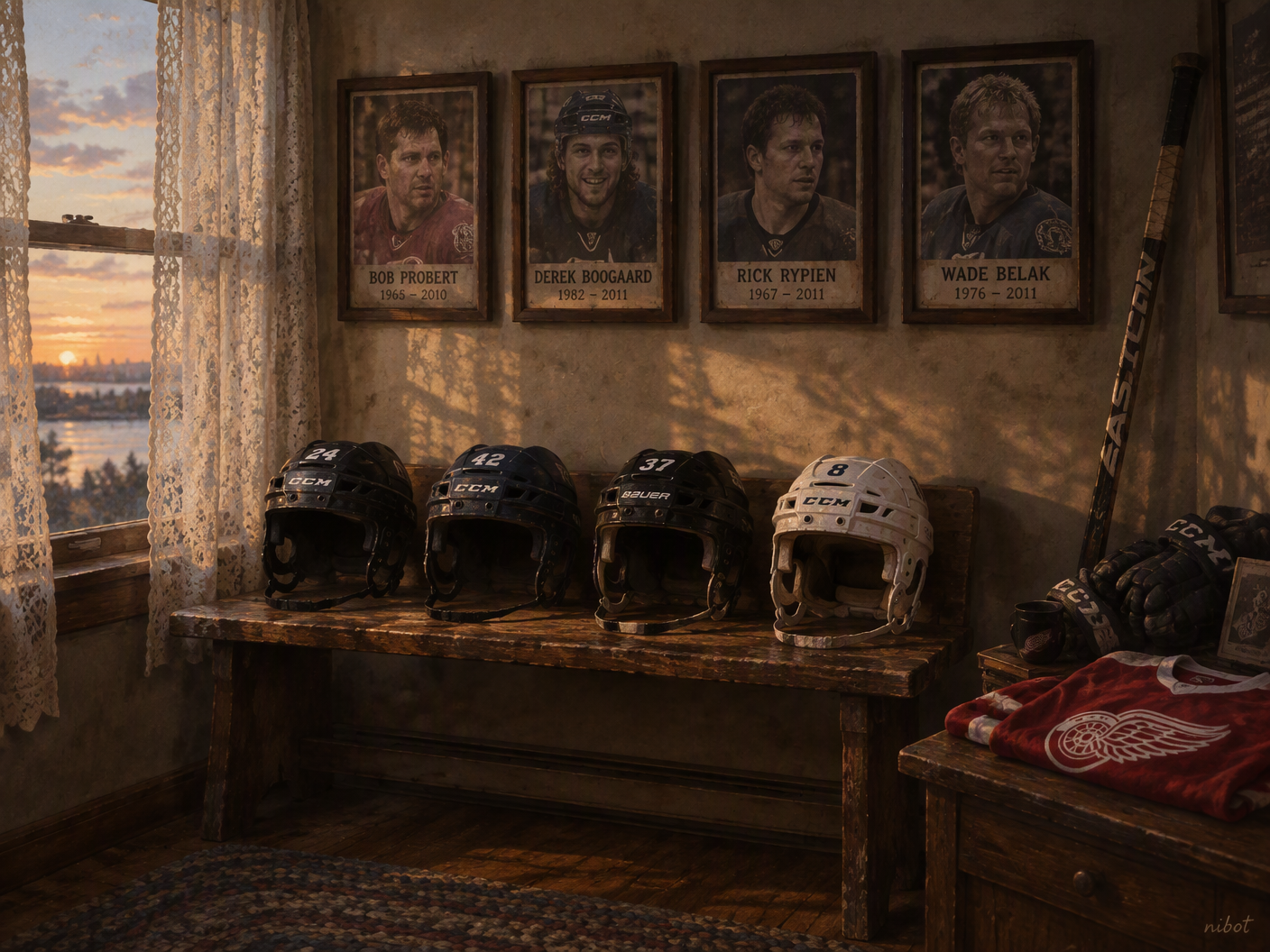
When Wade Belak was found dead in Toronto on August 31, 2011, he was the third NHL player to die in less than four months. Derek Boogaard had died in May; Rick Rypien in August. Belak, 35, had retired that March and was in Toronto to film CBC’s hockey-and-figure-skating show, Battle of the Blades. The condolences came with a sense of repeated loss. “You don’t replace it,” said Pat Quinn, who had coached Belak in Toronto. “You just hope the ones that are left behind can live through it and be all right.”
The previous summer, Bob Probert had died at 45 after collapsing on a boat on Lake St. Clair near Windsor, Ontario. His father-in-law, Dan Parkinson, performed CPR; efforts to revive him failed, family friend Rick Rogow said. “This was totally unexpected,” Parkinson said. Probert had played for Detroit and Chicago, becoming known for his fighting while also making an NHL all-star team. Former Detroit teammate Joe Kocur remembered the reassurance of playing alongside him: “It was great to be able to go out on the ice knowing that he had my back and I had his.”
Boogaard, 28, was found dead in his Minneapolis apartment on May 13, 2011. The Hennepin County medical examiner ruled his death accidental, caused by mixing alcohol and the painkiller oxycodone. The Rangers player had appeared in just 22 games before a season-ending concussion in December.
On August 15, Winnipeg Jets forward Rypien was found dead in his Alberta home at 27. The RCMP described the death as “sudden and non-suspicious.” CBC subsequently reported that he had been suffering from depression and had taken his own life; the initial police description was not itself a suicide finding.
Rypien had signed with Winnipeg in July after spending parts of six seasons in the Vancouver Canucks organization. Jets captain Andrew Ladd wrote that he had been looking forward to playing with him. The Canucks called Rypien “a great teammate and friend to our players, coaches and staff.” Fans created a tribute page, and former and current teammates posted condolences.
Belak’s death brought another round of messages. CBC reported, citing multiple sources, that he had taken his own life. Nashville, his last NHL team, remembered him as “a terrific teammate and wonderful father and husband” and offered support to his wife, Jennifer, and their children, Andie and Alex.
The deaths also brought discussion of the demands placed on players whose work included fighting. Speaking to CBC the morning after Belak’s death, sports psychologist and former Leafs development coach Paul Dennis described the emotional burden he believed enforcers could carry, including pressure to suppress vulnerability. He explicitly limited that observation: “I’m not saying that’s what happened with Wade but from my experience from dealing with other athletes that’s the mindset.”
Quinn’s last meeting with Belak that spring had been a happy one. Belak was excited about moving into commentating work, and Quinn thought he had the ability to succeed. “I was excited for him too,” Quinn said. “It was kind of one of those nice meetings where you walk away happy.”