
Tragedy ·
The Deadly Pitch Invasion at Port Said
After Al-Masry’s victory on February 1, 2012, supporters rushed the field and chased Al-Ahly players and fans. The violence and crush brought mass casualties, a league suspension and, three years later, appealable verdicts.
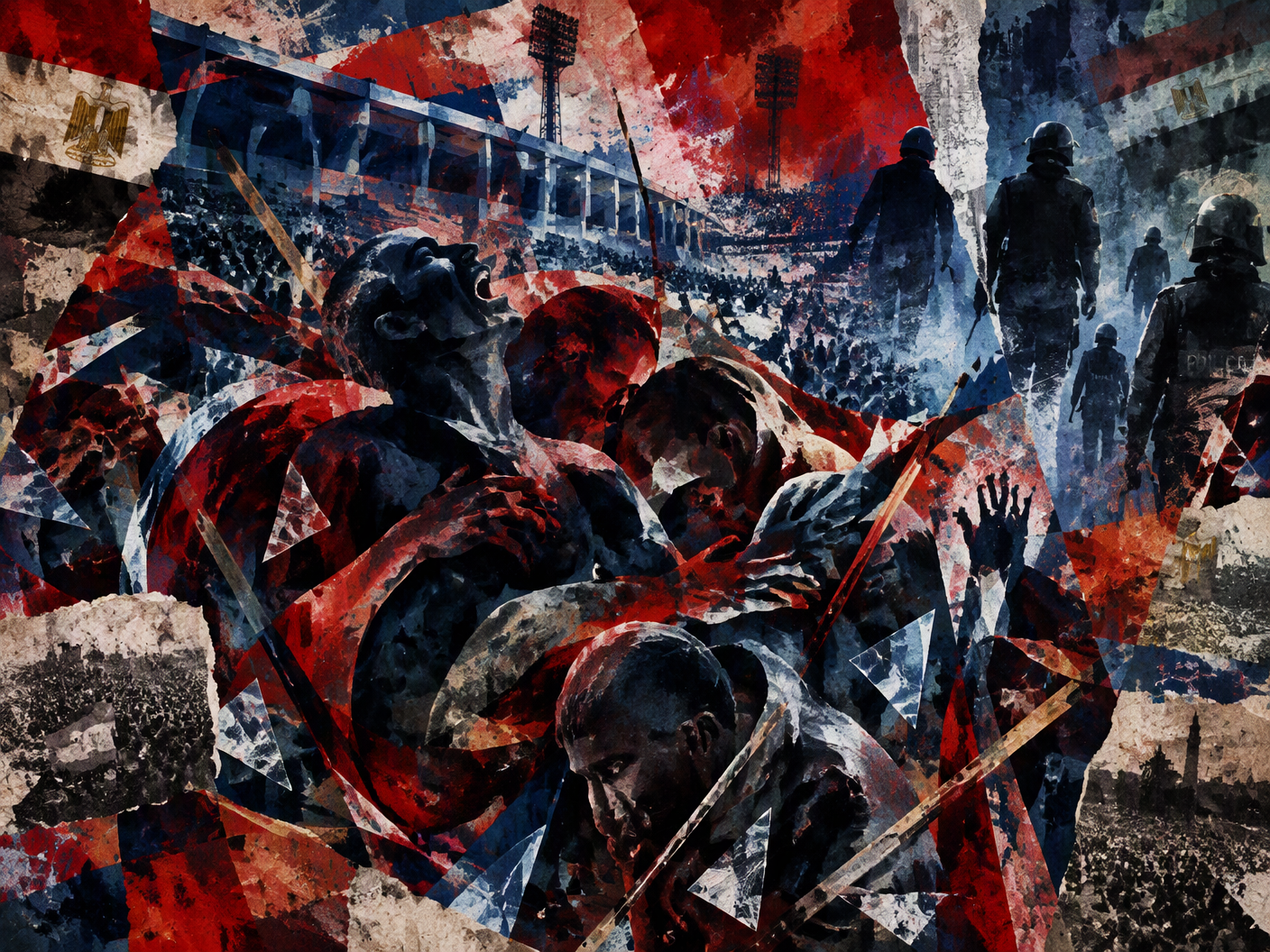
The final whistle had barely sounded in Port Said on February 1, 2012, when supporters of the home team, Al-Masry, flooded the pitch. Their side had beaten Cairo’s Al-Ahly 3–1. Al-Ahly players and supporters were chased, and people trying to escape were caught in a deadly crush.
Witnesses described Al-Masry supporters throwing sticks and stones as they pursued Al-Ahly players and fans toward the exits. Television footage showed players running for their changing room while fights broke out across the pitch. Some men rescued the losing team’s manager as he was being beaten. Players and supporters took refuge together in the changing room.
Egypt’s Health Ministry reported 74 deaths, including a policeman, and hundreds of injuries in the immediate aftermath. Interior Minister Mohamed Ibrahim said many victims had died in a crush at the stadium.
Al-Ahly player Abo Treika described the scene to the club’s television channel: “This is not football. This is a war and people are dying in front of us.” He said there was no security and no ambulances. Television footage showed black-clad police officers standing by, appearing overwhelmed. Al Jazeera correspondent Rawya Rageh said riot police on the pitch had been seen either not intervening or running in the other direction.
The state response came as anger spread beyond the stadium. State television reported that troops had been deployed in Port Said to prevent further clashes and that the military had secured the road out of the city. Ibrahim announced 47 arrests and said the search for suspects was continuing. The state prosecutor ordered an immediate investigation, parliament announced an emergency session, and the Egyptian league was suspended indefinitely.
Egypt was then less than a year beyond the fall of President Hosni Mubarak, and the failure to stop the violence became a focus of protests against police and military rule. On February 2, hundreds gathered at Cairo’s main railway station to meet injured people returning from Port Said. As the train arrived, some climbed onto it and raised Egyptian flags. The crowd chanted: “We die like them, or we ensure their rights.”
The legal proceedings extended years beyond that night. On June 9, 2015, a court sentenced 11 men to death for their part in the stadium riot, one of them in absentia. Other defendants received prison terms of five, 10 or 15 years, while 21 people were found innocent. The verdicts could be appealed. Yasser Sayed Ahmed, a lawyer for the family of one victim, called the ruling “extremely fair and satisfactory.”