
Tragedy · 2010s
The Al-Asriya Football Ceremony Bombing
On 25 March 2016, a suicide bomber detonated at a local football tournament’s trophy presentation in Al-Asriya near Iskandariya. An Iraqi official later gave the toll as 32 dead and 84 wounded, including local official Ahmed Shaker; the Islamic State claimed responsibility.
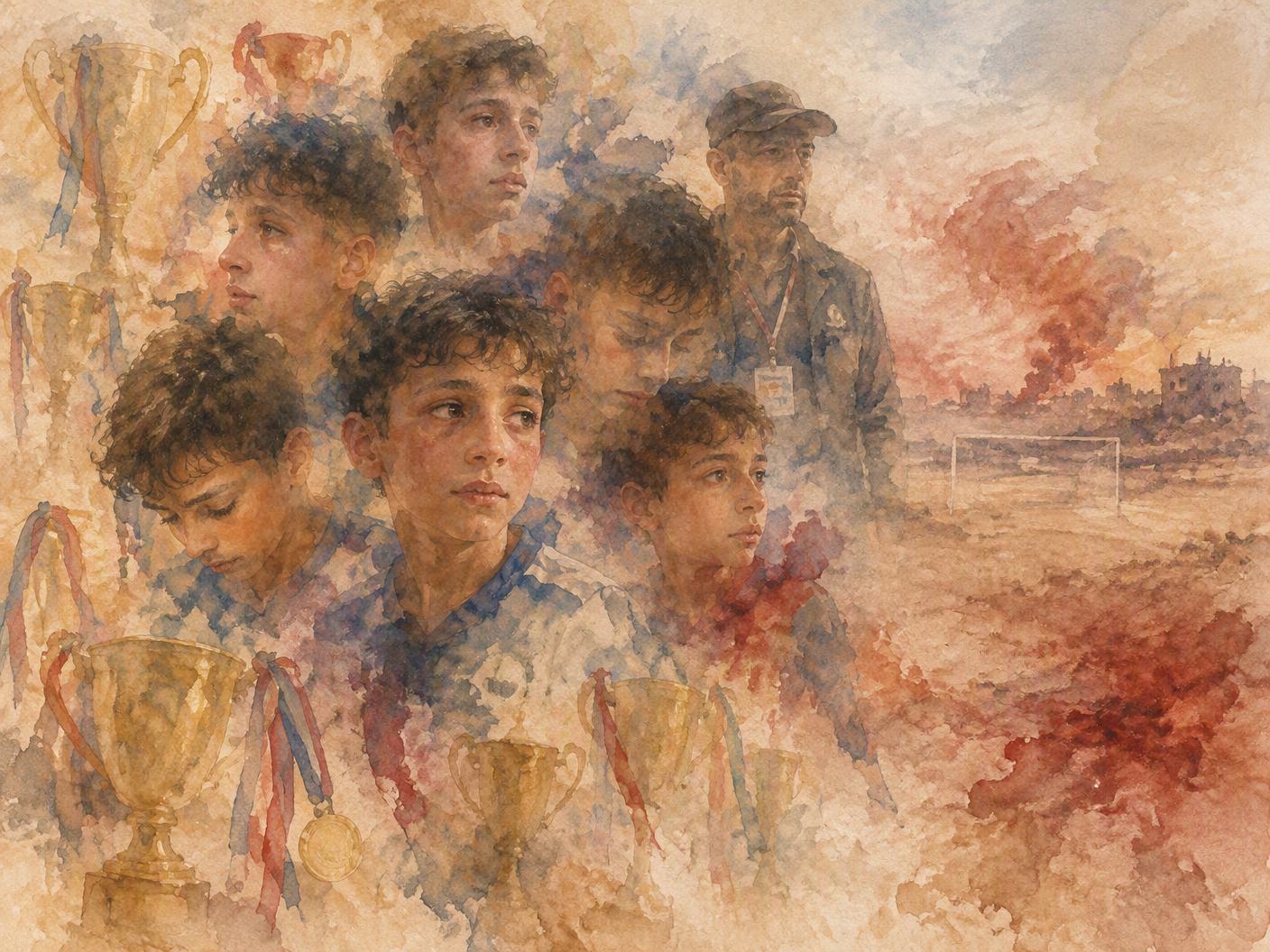
The bomber cut through the crowd while the trophies were being handed out. Ahmed Shaker, the local official standing at the ceremony, was presenting awards to the players when the explosive device detonated. The football tournament had ended in Al-Asriya, a village near Iskandariya in Babil Governorate. Then the ceremony became the target. The blast struck on 25 March 2016, late in the day, when the competition had already reached its harmless public ending: boys gathered around prizes, officials at the presentation, families close enough to watch.
Ali Nashmi was in the crowd. He later described the bomber moving through it before the explosion, at the moment Shaker was presenting the awards. Nashmi’s account fixes the attack inside the ceremony, not outside it and not after the players had gone home. The distinction matters in the plainest possible way. The gathering was not an accidental backdrop. The bomber entered the place where the tournament’s winners, relatives, and local officials had assembled to close the afternoon.
The blast killed Shaker. His name belonged to the small local world gathered around the tournament: the official presenting the trophies, the man at the public center of a village football event. The explosion also tore through the people standing nearest to the presentation. Emergency workers and survivors had to separate the ordinary objects of the ceremony from the consequences of the attack—awards, bodies, wounded spectators, and the scattered remains of an afternoon built around children playing football.
The first casualty counts were provisional and did not match. One early report recorded at least 30 killed and 95 injured; another gave about 30 dead and more than 65 wounded. Those were immediate estimates made while victims were still being taken for treatment and families were searching for names. The later official figure was more specific: 32 people dead and 84 wounded. That count provides the clearest public total in the surviving record, while the earlier numbers show how quickly the arithmetic changed during the first hours after the blast in Babil.
By the following day, an Iraqi health official gave a revised figure: 32 people dead and 84 wounded. The number narrowed the public count without making the human scale smaller. Early casualty totals are often provisional because the injured are moved between facilities, names are misspelled or missing, and families arrive before registers are complete. Here, the figures changed across 25 and 26 March. The bombing itself did not become less definite because the arithmetic was still being assembled.
The dead included children. Seventeen of them were boys between 10 and 16 years old. They had been close to a football tournament at the point where sport becomes ceremony: the awards, the official photographs, the prizes carried toward the winners. Their ages placed them inside the event’s most vulnerable population. On 26 March, victims were buried as mourners moved through the aftermath, carrying names and coffins away from the field where the tournament had ended.
The Islamic State claimed responsibility for the bombing. That claim supplied the group’s declared ownership of the attack, but not the name of the man who walked into the crowd. The public accounts identified the method, the target, the place, and the dead official. They did not independently establish the bomber’s identity or disclose the planner who selected the ceremony. What remained visible was the final act: one attacker entering a local gathering and turning its awards presentation into a mass killing.
There was no distant stadium perimeter in this account, no separate battlefield, no ambiguity about what the crowd had gathered to do. The attack took place near Iskandariya, in Al-Asriya, at the end of a local amateur football tournament. Players had completed the part that required a ball, a field, and opposing sides. The remaining ritual—trophies passed to winners—put the official and the spectators together in one place. That was where the bomber detonated.
Shaker’s death joined the ceremony to the village’s wider authority. He was not killed in an office or on a road between official appointments. He was presenting awards in front of the people who had come to watch the tournament finish. The attack therefore struck both the crowd and the person presiding over its public conclusion. Around him were the boys who had played, the families who had watched, and the local witnesses who would carry the scene into the burials the next day.
The casualty record on 26 March contained both early estimates and a later official count, not one settled number from the outset. Initial reports put the dead at at least 30 or about 30, with injuries ranging from more than 65 to 95. An Iraqi official later reported 32 dead and 84 wounded. The figures therefore document stages of counting rather than a single consistent total. The fixed elements are the place, the date, the trophy ceremony, the suicide bombing, Shaker among the dead, and the Islamic State’s claim of responsibility.
Investigative Dossier & Evidence
Read the companion investigation notes, verified source claims, and primary documents.
Read the Companion Notes & Evidence Record →