
Tragedy ·
Buddy McGirt Asked to Stop the Fight. Maxim Dadashev Died Four Days Later.
The unbeaten boxer underwent emergency brain surgery after his July 2019 title eliminator against Subriel Matías. Russia’s boxing federation attributed his death to injuries sustained in the bout.
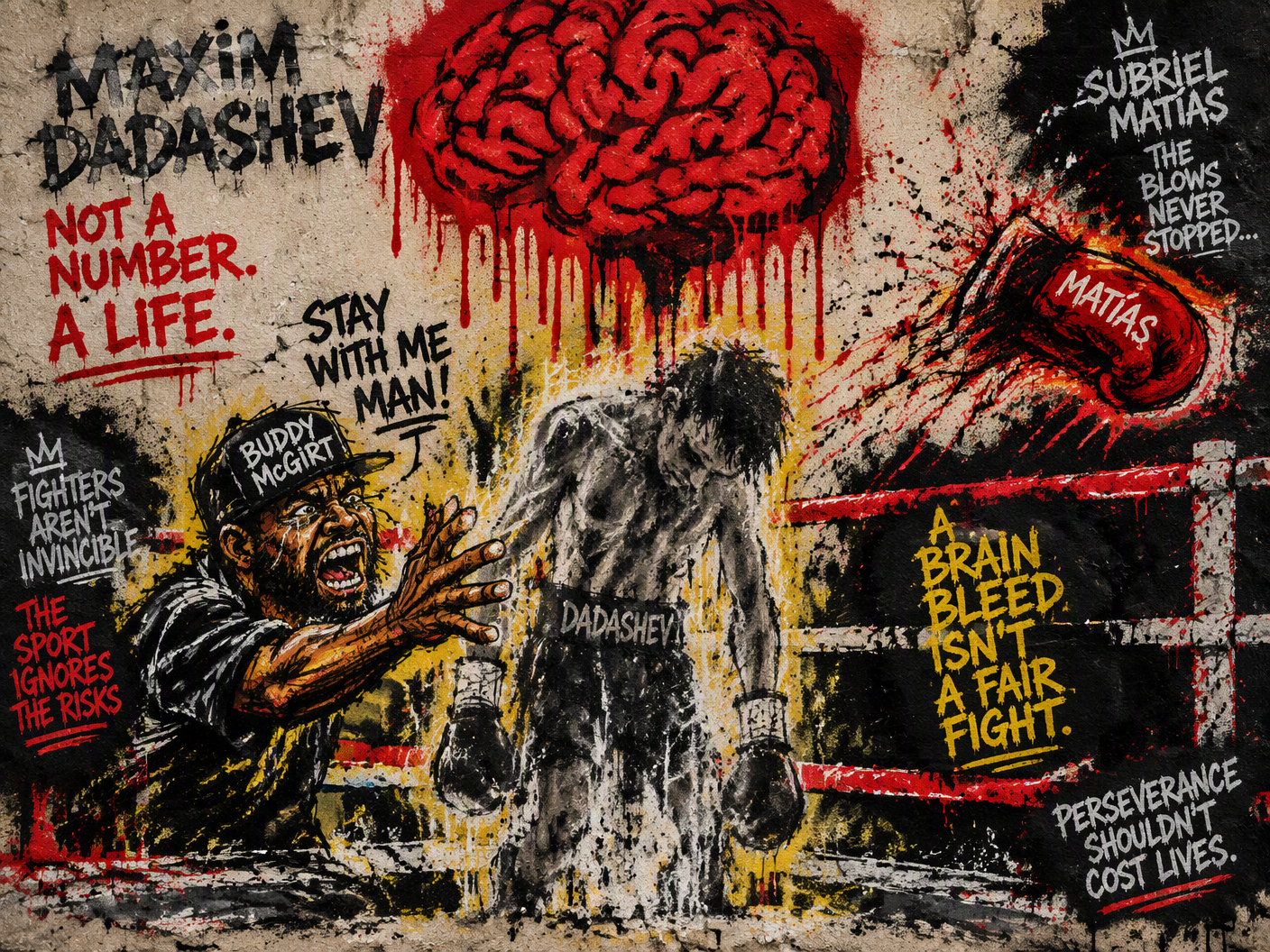
After the 11th round, Maxim Dadashev shook his head as his trainer, James “Buddy” McGirt, pleaded with him to stop. “You’re getting hit too much, Max. Please, Max, please let me do this,” McGirt told him, in footage of the July 19, 2019, fight against Subriel Matías. McGirt asked the referee to end the bout. There would be no 12th round.
The fight at the Theater at MGM National Harbor in Oxon Hill, Maryland, offered two unbeaten boxers a route toward a championship. Both entered with professional records of 13–0; the winner would earn the right to challenge IBF titleholder Josh Taylor.
By the stoppage, Dadashev had taken numerous shots to the head. Matías won by technical knockout, but Dadashev’s difficulties continued after the fighting ended. He needed help leaving the ring, vomited on his way out of the arena and was placed on a stretcher.
Dadashev was taken to University of Maryland Prince George’s Hospital Center, where he underwent a two-hour operation to relieve a subdural hematoma, or brain bleed, on his right side. He was placed in a medically induced coma.
McGirt explained his decision in an interview shortly after the fight. “One punch, as you know, can change a whole guy’s life. And I wasn’t going to let that happen,” he said. “I’d rather them be mad at me for a day or two than to be mad at me for the rest of their life.” His words described the risk he was trying to prevent, not a medical finding about which blow had injured Dadashev.
The next day, Dadashev’s manager, Egis Klimas, told ESPN that the boxer had shown signs of severe brain damage, though Klimas also reported encouraging signs of improvement. On July 23, four days after the bout, the Russian Boxing Federation announced that Dadashev had died “as a result of the injuries he sustained” in the fight.
His wife, Elizaveta Apushkina, remembered him in a statement issued by the hospital. “He was a very kind person who fought until the very end,” she said. She thanked those who had cared for him during his final days and spoke of their son: “Our son will continue [to] be raised to be a great man like his father.”