
Tragedy ·
The Match That Resumed After the Burnden Park Crush
On 9 March 1946, 33 people died during Bolton Wanderers’ FA Cup tie against Stoke City. Play resumed after the dead and injured were taken from the terrace; an inquiry later recommended tighter crowd limits.
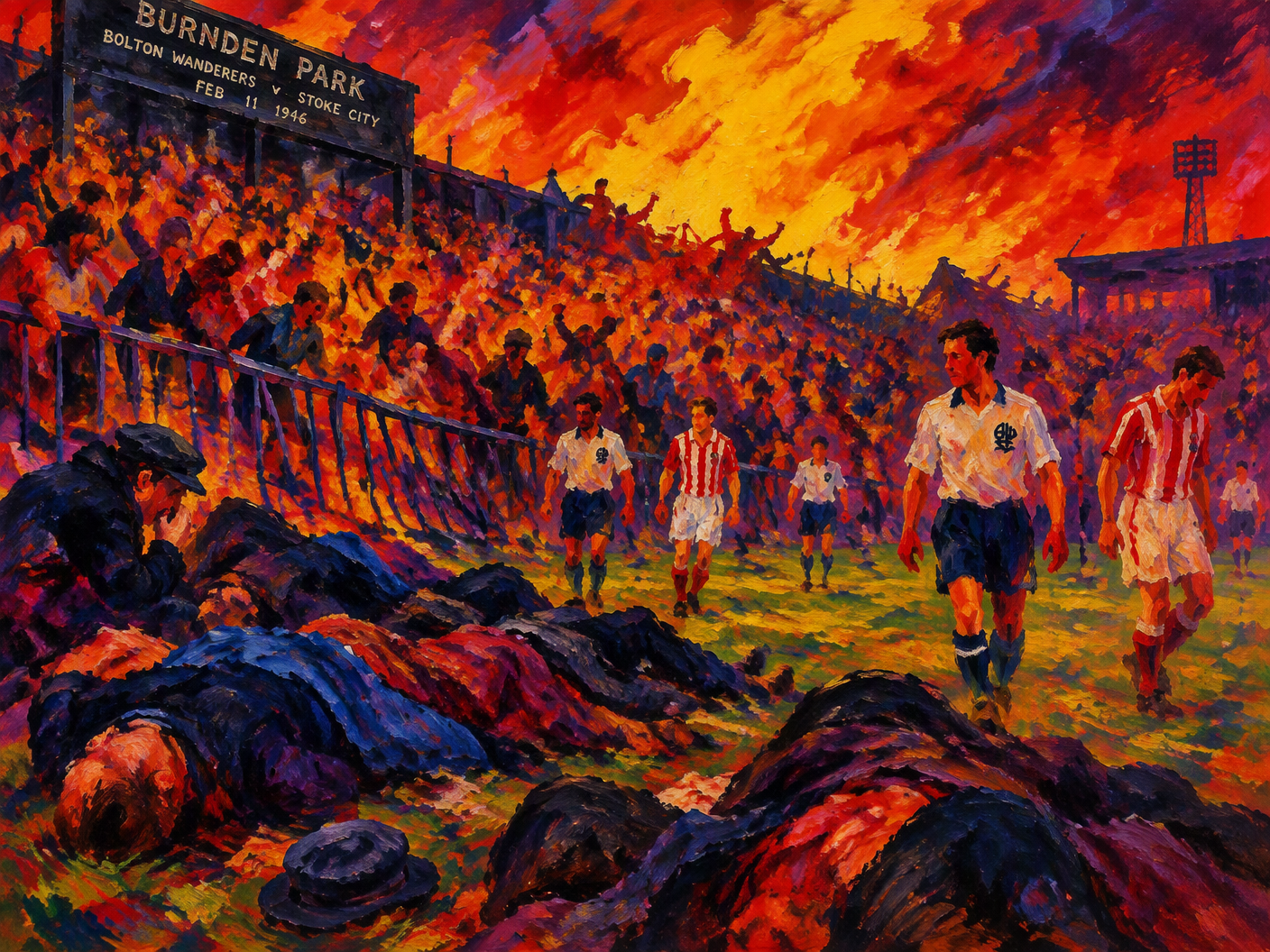
On 9 March 1946, a crowd crush at Burnden Park killed 33 people during Bolton Wanderers’ FA Cup tie against Stoke City. Play was stopped, and the dead and injured were taken from the terrace. Then the match resumed, with bodies lying beside the pitch. It ended goalless.
The sixth-round tie was being played over two legs, and Bolton had won the first match 2–0 a week earlier. This was the first FA Cup season after the war, and Stoke’s team included Stanley Matthews. Bill Cheeseman had come to Burnden Park with his sister, who wanted to see Matthews play.
An estimated 85,000 people gathered at the ground. Part of the Burnden Stand remained in government use after the war, and some turnstiles were closed. About 20 minutes before the scheduled 3pm kick-off, the remaining turnstiles were shut because the ground was considered over capacity. Spectators continued to enter, including by climbing over the turnstiles.
Several minutes into the match, two barriers on an overcrowded terrace collapsed and people fell into the crush. Some victims were crushed against steel barriers; others were trampled.
“It was such a crush. It was getting dangerous. We were getting squeezed by the people in front and behind. Everyone was pushing,” Cheeseman recalled in a BBC account. “All of a sudden those that were in front of us seemed to go — all falling down like a pack of cards.” He and his sister escaped. Like many spectators, they did not learn the full extent of the disaster until they heard the news.
Hundreds were injured. Accounts put the number at approximately 400 to 500: the BBC reported 400, while the Bolton News gave 500. The dead were laid beside the pitch and covered with coats before play resumed.
An official inquiry led by Moelwyn Hughes followed. Its report recommended tighter control of the number of spectators allowed into football grounds.