
Violence & Brawls ·
The Explosive Attack on Bahia’s Team Bus
Players were injured on their way to a February 2022 match. Four Bamor members were later referred for a jury trial—not convicted—and their defense disputes the evidence.
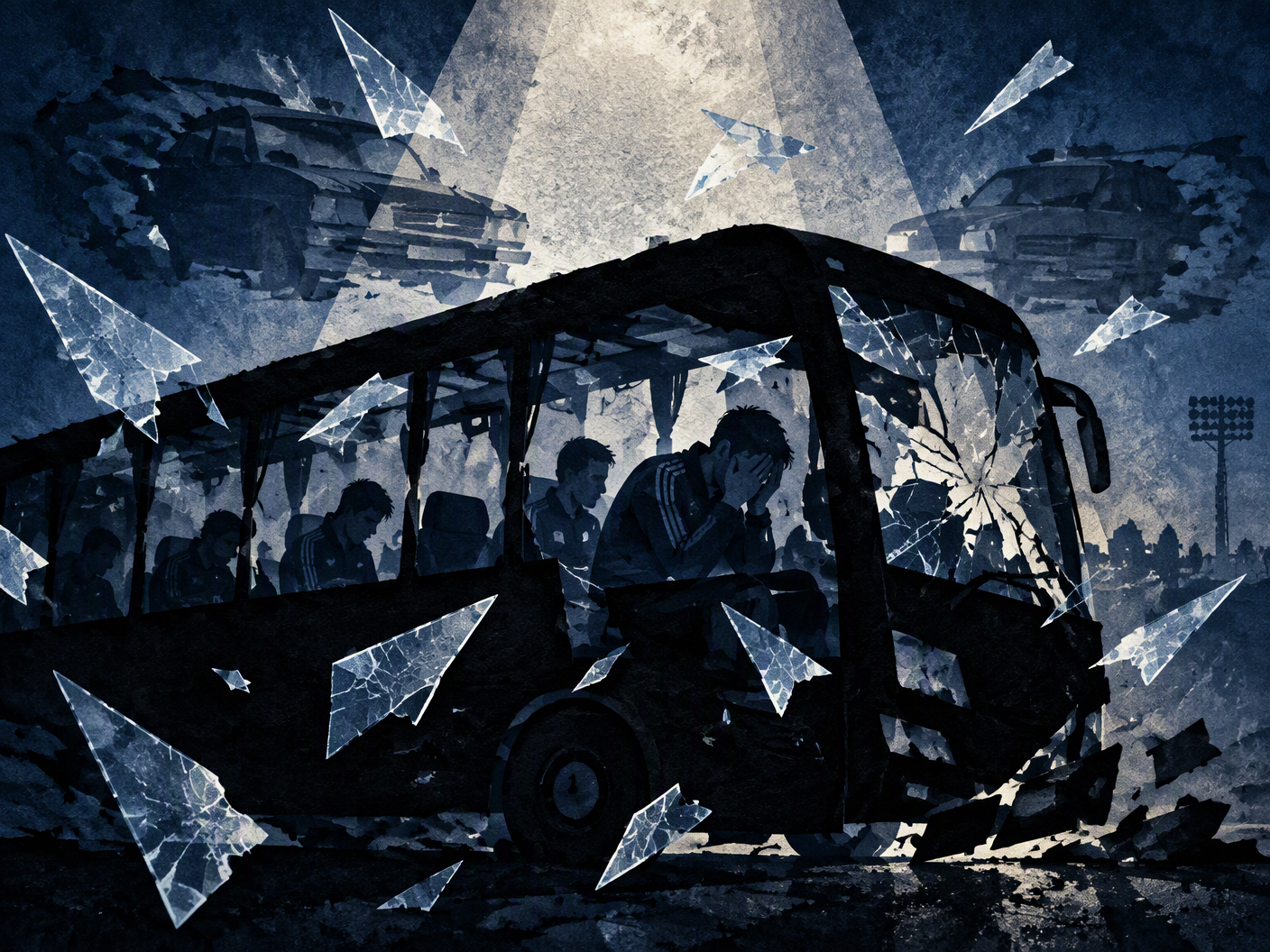
Bahia’s players were travelling to a Copa do Nordeste match on the night of February 24, 2022, when explosives were thrown at their bus near Salvador’s Arena Fonte Nova. One device entered through a window on the right side, near the rear seats. A seat was torn and broken glass scattered inside. Goalkeeper Danilo Fernandes was hit in the face; instead of preparing to face Sampaio Corrêa, he was taken to hospital.
Fernandes suffered multiple wounds and received 20 stitches across his ear, face and leg. He underwent surgery to remove glass from his neck and was discharged the following evening, with an eye specialist’s assessment still required, according to the club. Matheus Bahia was also injured. The damage extended beyond the team bus: Bahia said a car travelling alongside it on Avenida Bonocô was hit too.
The team initially discussed whether to play. Coach Guto Ferreira then announced that the players would take the field “to honour the colours of Bahia.” They beat Sampaio Corrêa 2–0. In its message after the final whistle, the club acknowledged both the result and the attack.
Police examined the bus and used security-camera footage and witness accounts in their investigation. Prosecutors charged four members of the organized supporters’ group Bamor in September 2022. The accusation concerned their alleged participation in the explosive attack—not an established finding that Bamor as an organization had ordered it.
On September 24, 2026, four years and seven months after the attack, Bahia’s state court said the four defendants would be sent for a jury trial on charges of attempted aggravated homicide involving a means capable of endangering others. According to the prosecution, they had travelled in two cars with three unidentified people and waited for the bus. Two defendants allegedly threw the explosives; the other two allegedly drove the vehicles used in the attack and escape.
The referral was not a conviction. The judge found sufficient indications to put the allegations before a jury, citing examined images, injury reports, vehicle examinations and testimony. She identified a possible division of tasks and indications that the accused had voluntarily assumed the risk of causing deaths. At the September announcement, all four remained free while facing the proceedings; the referral could be appealed, and a trial date depended on that appeal stage being exhausted.
Their defense disputed both the evidence and the legal reasoning, saying it would seek to overturn the referral. It argued that testimony had not established an intention to kill and challenged the decision’s reliance on the defendants’ alleged acceptance of the risk of death. “The gravity of the episode does not authorize attributing to someone a crime that the evidence has not demonstrated,” the defense said, while expressing sympathy for the injured players. For Fernandes, the physical aftermath had continued long after match night: for months, he had pieces of glass removed from his body.