
Scandals & Feuds · 2000s
Alvin Henry’s Olympic Relay Profile and the New York Rape Case
Alvin Henry was known publicly as a Trinidad and Tobago sprinter before his 2007 arrest in New York City. The case ended on 8 August 2008 with a guilty plea and a 21-year prison sentence.
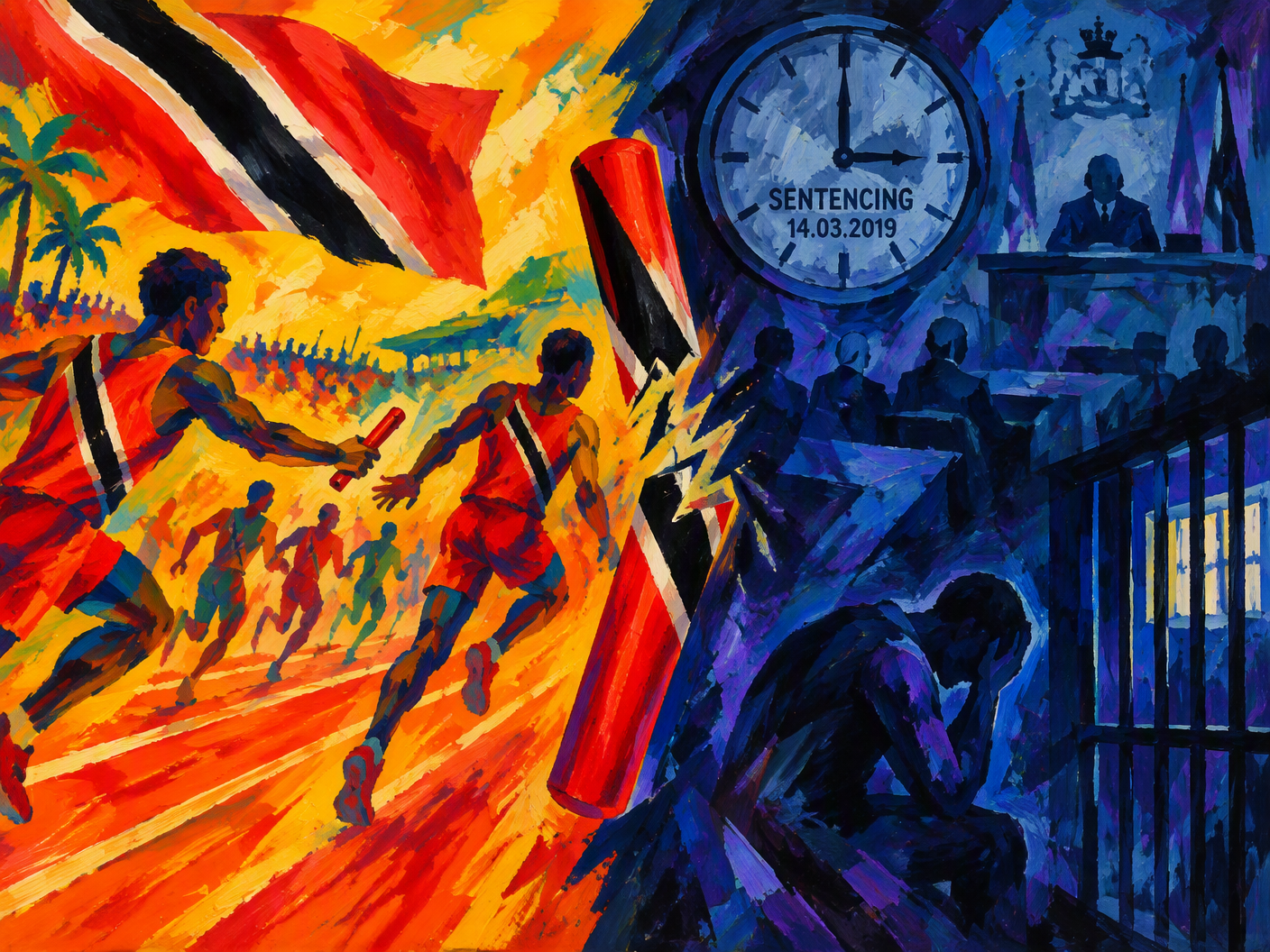
On 8 August 2008, in New York City, Alvin Henry pleaded guilty and received a 21-year prison sentence. The judgment closed the central legal sequence that had begun with his arrest thirteen months earlier, but it also altered the meaning of the name carried into court. Henry had entered public life as a Trinidad and Tobago sprinter, a competitor associated with international relay running. By the time the sentence was imposed, that athletic identity stood beside a criminal case involving rape charges and five women, including a 15-year-old girl.
Henry was born on 29 September 1976 in Trinidad and Tobago. His biography belonged first to the compressed world of sprinting, where an athlete’s public identity could be reduced to a nationality, an event, and a place on a relay list. He was identified as a sprinter, not as a distance runner or a specialist whose career unfolded over long seasons. The available profile places him within Trinidad and Tobago’s competitive track program before the criminal proceedings made New York the defining location in the later account of his life.
At the 2000 Summer Olympics, Henry was listed on Trinidad and Tobago’s 4 × 100 metres relay team. The listing placed him within one of the Games’ most exacting events: four runners, four exchanges, and no room for a baton handed over beyond the marked zone. His presence on the squad did not mean that he ran in the Olympic relay itself. Henry did not compete in that event, a distinction that separates selection from performance and keeps the Olympic connection within its proper limits.
Two years later, in San Salvador, El Salvador, Henry won bronze with Trinidad and Tobago’s relay team at the Central American and Caribbean Games. The medal gave his athletic biography a recorded result rather than merely a roster position. It placed him within the regional competition of 2002, representing a country whose sprint relays had long supplied its most visible track ambitions. The details are brief, but they establish the public role that preceded the arrest: Henry was an international relay athlete with a place in Trinidad and Tobago’s sporting delegation.
That athletic history did not disappear when the criminal case began. It became the first half of a divided chronology. The relay listing, the Olympic affiliation, and the bronze medal belonged to competition and national representation. The next decisive date belonged to New York City. On 1 July 2007, Henry was arrested there. The transition from athlete to defendant occurred in a single entry on the calendar, but the public meaning of the earlier entries changed as the case moved toward prosecution and punishment.
The arrest involved rape charges concerning five women, including one 15-year-old girl. The account of the case also states that Henry confessed to the charges. Those facts introduced a set of alleged victims whose lives were not part of the sporting biography that had preceded them. Their presence changed the scale of the story. What had once been organized around lanes, relay squads, and medals now turned on accusations of sexual violence and the authority of a New York criminal court.
The thirteen months between the arrest and the plea are compressed in the surviving public outline. There is no detailed sequence here of hearings, motions, negotiations, or the conditions under which the confession was made. What remains clear is the direction of the case. Henry was arrested in July 2007, and by August of the following year he had entered a guilty plea. The legal process had moved from accusation to admission, replacing the uncertainty of an arrest with a formal criminal disposition.
On 8 August 2008, the court imposed a 21-year prison sentence. A guilty plea carries a different procedural weight from an arrest: it is a disposition of the criminal case, not an opening allegation. The sentence also gave the episode a measurable consequence, extending far beyond the temporary language of a roster omission or a federation decision. Henry’s athletic career had been recorded in appearances and affiliations. His criminal case ended in years of confinement, fixed by the court on a precise date.
The contrast between the two biographies is not a literary invention. One identified Henry as a sprinter born in Trinidad and Tobago, associated him with the 2000 Olympic relay squad, and placed him on a bronze-medal relay team in San Salvador in 2002. The other began with a New York arrest on 1 July 2007, involved five women including a 15-year-old girl, and concluded with a guilty plea and a 21-year sentence. The same name connects those passages, but the institutions and consequences are entirely different.
After the sentence, the durable public outline was no longer an athletic profile alone. Henry remained identifiable as a Trinidad and Tobago sprinter, born on 29 September 1976, but the later criminal case supplied the final established point in the chronology: a guilty plea in New York City and 21 years in prison. The relay baton and the prison term belong to different systems, governed by different authorities and carrying different kinds of consequence. Together they form the record of a life that changed category without erasing what came before.
Investigative Dossier & Evidence
Read the companion investigation notes, verified source claims, and primary documents.
Read the Companion Notes & Evidence Record →