
Violence & Brawls · 1977
The Punch That Ended Rudy Tomjanovich’s Season
On December 9, 1977, Kermit Washington struck Rudy Tomjanovich during a Lakers-Rockets altercation, causing severe facial injuries and ending Tomjanovich’s season. Decades later, Washington pleaded guilty in a separate federal charity-fraud case involving false tax statements and aggravated identity theft.
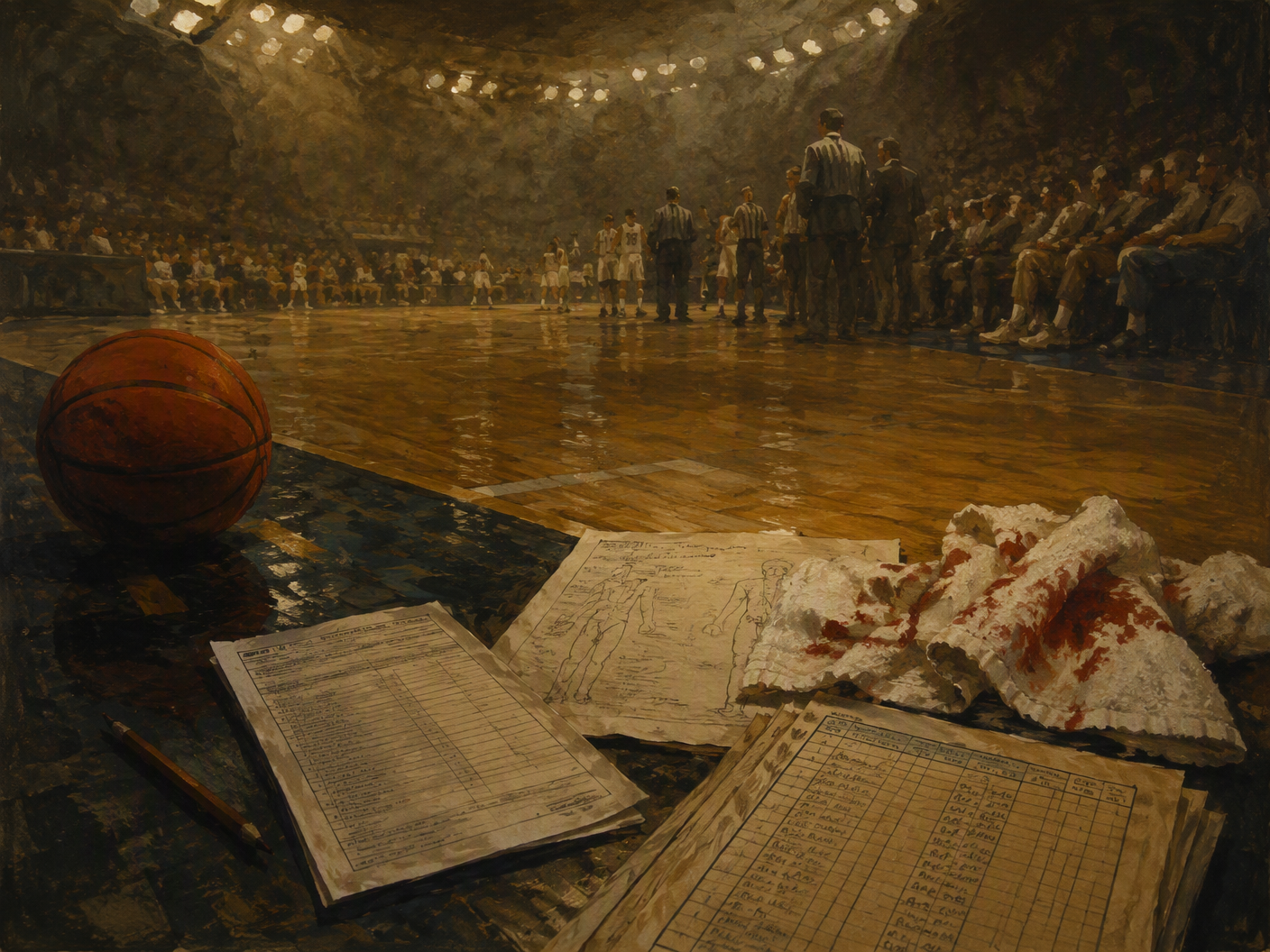
On December 9, 1977, a Los Angeles Lakers game against the Houston Rockets broke open into an on-court altercation. Kermit Washington struck Rudy Tomjanovich, a Houston forward, with a punch that caused severe facial injuries. The blow turned a professional basketball game into a medical emergency and placed both players inside a story that would outlast the season, their teams, and the ordinary memory of a hard foul. For Tomjanovich, the immediate future became recovery. For Washington, the act brought the NBA’s disciplinary machinery into the case.
The game belonged to an era when basketball’s physical language was often treated as part of its appeal. Contact accumulated beneath the arena lights, bodies colliding as players fought for position and possession. Then the altercation crossed into a different category. The preceding scuffle has never carried one uncontested sequence in the surviving accounts, but the central event remains fixed: Washington punched Tomjanovich. The distinction between a game’s routine violence and a single blow was no longer theoretical. It was written onto Tomjanovich’s face.
Tomjanovich was not simply removed from that night’s contest. The injuries were severe enough to end his 1977–78 season. A player whose professional life depended on returning to the court now faced a long absence, with the violence of one moment separating the scheduled rhythm of games from the uncertain work of healing. The season continued without him. Houston had to proceed without one of its established players, while the incident followed Washington into every discussion of the limits of force in basketball.
Surviving reference and news accounts reported that the NBA fined Washington $10,000 and suspended him for 60 days, a penalty that cost him 26 games. Those reported terms translated the punch into administrative measures: money, missed appearances, and a period away from competition. They could quantify Washington’s absence. They could not quantify Tomjanovich’s lost season or the personal burden of returning from severe facial injuries. The accounts closed the immediate disciplinary portion of the story, but the reported penalty did not close the human consequences of the altercation.
For Tomjanovich, the court became something he would have to reach again rather than a place he could simply report to. The incident ended his season, but it did not end his professional career. After recovering from the injuries, he returned to NBA play and continued for three more seasons. His return restored a measure of the career the punch had interrupted, yet it could not make the interruption disappear. The calendar recorded later games; it did not erase the night that had made them uncertain.
Washington also returned to basketball after the period of suspension described in the surviving accounts. The game moved forward around the memory of the punch, and both men eventually appeared again within professional basketball’s continuing schedule. That sequence shows how a season can resume even when an event remains fixed in the record. Tomjanovich’s later playing seasons and Washington’s return placed both men back inside the sport. The passage of games supplied movement after the altercation, but it did not undo the injury, the lost season, or the reported penalty.
The incident became part of the record surrounding Washington’s career. It was not a career statistic, though it remained attached to the history of his professional life. Tomjanovich’s name remained linked to the injury and the recovery that followed. The story survived because basketball could not contain it as an ordinary altercation. A punch on a court had produced consequences beyond the possession, the quarter, or the game: a season removed, a career interrupted, and a fine and suspension reported in later accounts of the league’s response.
Forty years later, Washington faced a different kind of institutional scrutiny. In December 2017, he pleaded guilty to two counts of making a false statement in a tax return and one count of aggravated identity theft. The setting had changed from a basketball court to federal court, and the mechanism had changed from a punch to financial conduct. The earlier incident supplied the public memory, but the guilty plea established a separate legal chapter in Washington’s life, governed by tax filings, identity records, and federal criminal procedure.
Federal prosecutors said Washington had used his position as a regional representative of the National Basketball Players Association to refer athletes to attorney Ronald Mix. They said charitable donations accepted by Washington were, in substance, illegal referral payments. Their account described a system in which access built through professional basketball could be converted into private financial benefit. The allegations belonged to the charity-fraud case, not to the 1977 game, but they placed another form of power beside the old punch: influence moving through relationships, titles, and trust.
The two episodes are separated by four decades, yet both entered the record through institutions that translated conduct into consequences. In 1977, surviving reports described a $10,000 fine and a 60-day suspension after the punch, while Tomjanovich lost the remainder of his season. Tomjanovich later returned to play. In 2017, Washington admitted guilt to three federal counts. The first case showed how physical force could alter another athlete’s life. The second showed how Washington’s position as a regional representative of the National Basketball Players Association became part of a prosecution’s account of financial misconduct.
The enduring fact of the 1977 game is not that basketball was rough, or that careers continued after the headlines faded. It is that one punch transferred the costs of an altercation onto another player’s body and season. Tomjanovich returned, but the return came after an absence imposed by violence. Reports described Washington as serving a 60-day suspension, and he later entered a guilty plea in a separate federal case. The court, the reported penalty, and the calendar each supplied their own form of closure. None could restore the moment before the punch landed.
Companion notes
What the Record Establishes About the 1977 Punch and Washington’s Later Guilty Plea
The available record firmly establishes the punch, Tomjanovich’s severe facial injuries, the lost season, the reported NBA suspension, and Washington’s 2017 guilty plea. It is less complete on the precise sequence before the punch and on the medical record underlying descriptions of the injuries.
The game and the central act
The Rudy Tomjanovich biographical record and the Kermit Washington biographical record both identify December 9, 1977, as the date of the Lakers-Rockets game and state that Washington punched Tomjanovich during an altercation. The Kansas City Star’s account supplies the same basic chronology. Together, these sources establish the game date, the participants, and the punch itself. They do not resolve every disputed detail of the scuffle that preceded it, so the story should not reconstruct that sequence as settled fact. [S1], [S2], [S4]
Injury and season-long consequence
The available descriptions support the conclusion that Tomjanovich suffered severe facial injuries. The Tomjanovich record describes the blow as shattering his face and causing life-threatening head and spinal injuries, while the Kansas City Star describes shattered facial bones. The captured packet does not include hospital records, an autopsy, or a contemporaneous official injury report. The strongest defensible formulation is therefore severe facial injury, rather than a more detailed medical account. The same sources establish that the incident ended Tomjanovich’s 1977–78 season. [S1], [S4], [S5]
NBA discipline
The Kermit Washington record and the Kansas City Star report that the NBA fined Washington $10,000 and suspended him for 60 days, causing him to miss 26 games. Those sources establish the reported penalty and its practical effect. The record does not contain a standalone NBA disciplinary ruling, commissioner’s order, or contemporaneous league bulletin. The disciplinary claim should therefore be attributed to the surviving reference and news accounts rather than presented as a quotation from an underlying NBA document that is not included here. [S2], [S4]
Tomjanovich’s return
The Tomjanovich biographical record states that he eventually recovered and played three more NBA seasons. The supplied Basketball-Reference page is a career-statistics page for Kermit Washington, not Rudy Tomjanovich, and therefore does not corroborate Tomjanovich’s later seasons. The biographical record supports the account of Tomjanovich’s return to NBA play. It does not provide an independent medical assessment of the extent or completeness of his recovery, document every stage of rehabilitation, or establish how the injuries affected him beyond the playing record. [S1], [S5]
The 2017 federal case
The Kansas City Star reports that Washington pleaded guilty on December 4, 2017, to two counts of making a false statement in a tax return and one count of aggravated identity theft. The same account attributes the referral-payment narrative to federal prosecutors: Washington, acting as a regional representative of the National Basketball Players Association, allegedly referred athletes to attorney Ronald Mix, while charitable donations were characterized by prosecutors as illegal referral payments. The record does not include the plea agreement or transcript, so the counts are established by the reported guilty plea, while the detailed mechanism must remain explicitly prosecutorial in attribution. [S2], [S4]
Source key
The associated evidence packet contains visible source URLs, source roles and the complete claim ledger.