
Scandals & Feuds · 1910s
The Seven-Day Card
Jimmy Claxton got one brief Pacific Coast League chance with the Oakland Oaks in 1916. The club released him six days later; a photographer’s visit made the stint last.
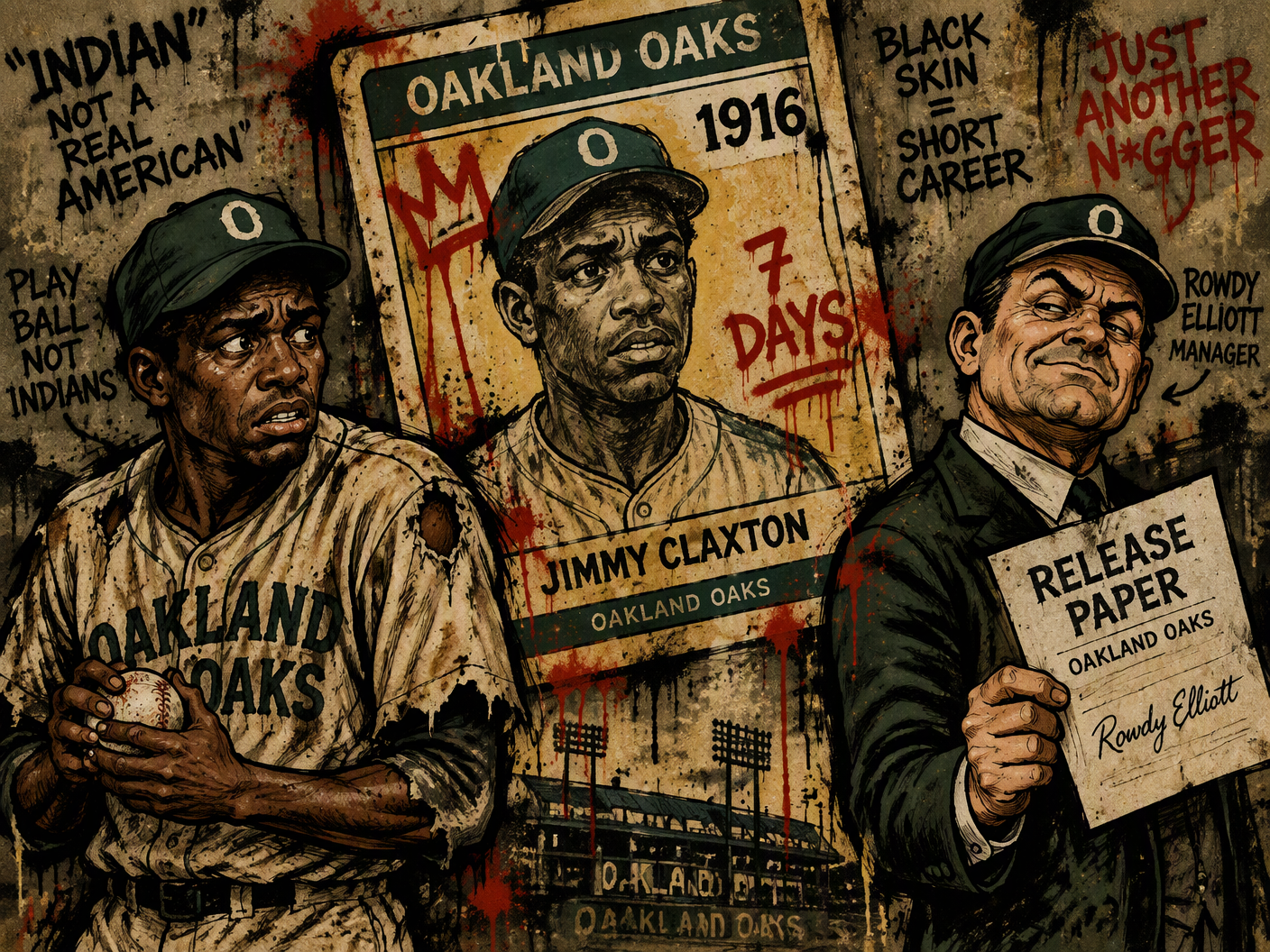
Jimmy Claxton took the ball for the Oakland Oaks against the Los Angeles Angels on May 28, 1916. Oakland was in last place and short on pitching. The chance came in a doubleheader, and Claxton’s Oakland line lasted 2⅓ innings: three runs, four hits, four walks. The numbers were brief. So was the room to recover from them.
Contemporary coverage called Claxton “obviously nervous” and said he could not be fairly judged by that showing. The San Francisco Call referred to him as an “Indian southpaw” and described “a frightened look on his face.” When Oakland signed him, Claxton had been presented as a Native American, or as coming from a reservation. That was the frame placed around the pitcher before the result could stand on its own.
Rowdy Elliott released Claxton on June 3, six days after the appearance. The decision closed his Oakland opportunity before it became a sustained place on the roster. The record fixes the date and the release; it does not establish every reason behind Elliott’s decision. What it does show is the narrow opening Oakland gave him: one doubleheader, 2⅓ innings, then out.
The short stay left one unexpected witness. A photographer for the Zeenut card series happened to visit while Claxton was with Oakland. The 1916 Zeenut card featuring him was produced during that Oaks stint, when the pitcher’s place on the roster could still be counted in days. The card turned the appearance into a physical record without changing what the club did with him.
In 2005, one Claxton Zeenut card sold at Sotheby’s for $7,200. Elliott’s release ended Claxton’s Oakland stay on June 3. The card remained.
Investigative Dossier & Evidence
Read the companion investigation notes, verified source claims, and primary documents.
Read the Companion Notes & Evidence Record →