
Scandals & Feuds · 2010s
beoutQ and the Saudi-Based Satellite Piracy Operation
From 2017 to 2019, beoutQ carried rebranded beIN Sports programming through ten satellite channels in Saudi Arabia, turning a diplomatic dispute into an international fight over broadcast rights. Sports bodies condemned the service, ArabSat denied involvement, and a World Trade Organization panel later found evidence that beoutQ operated from Saudi territory.
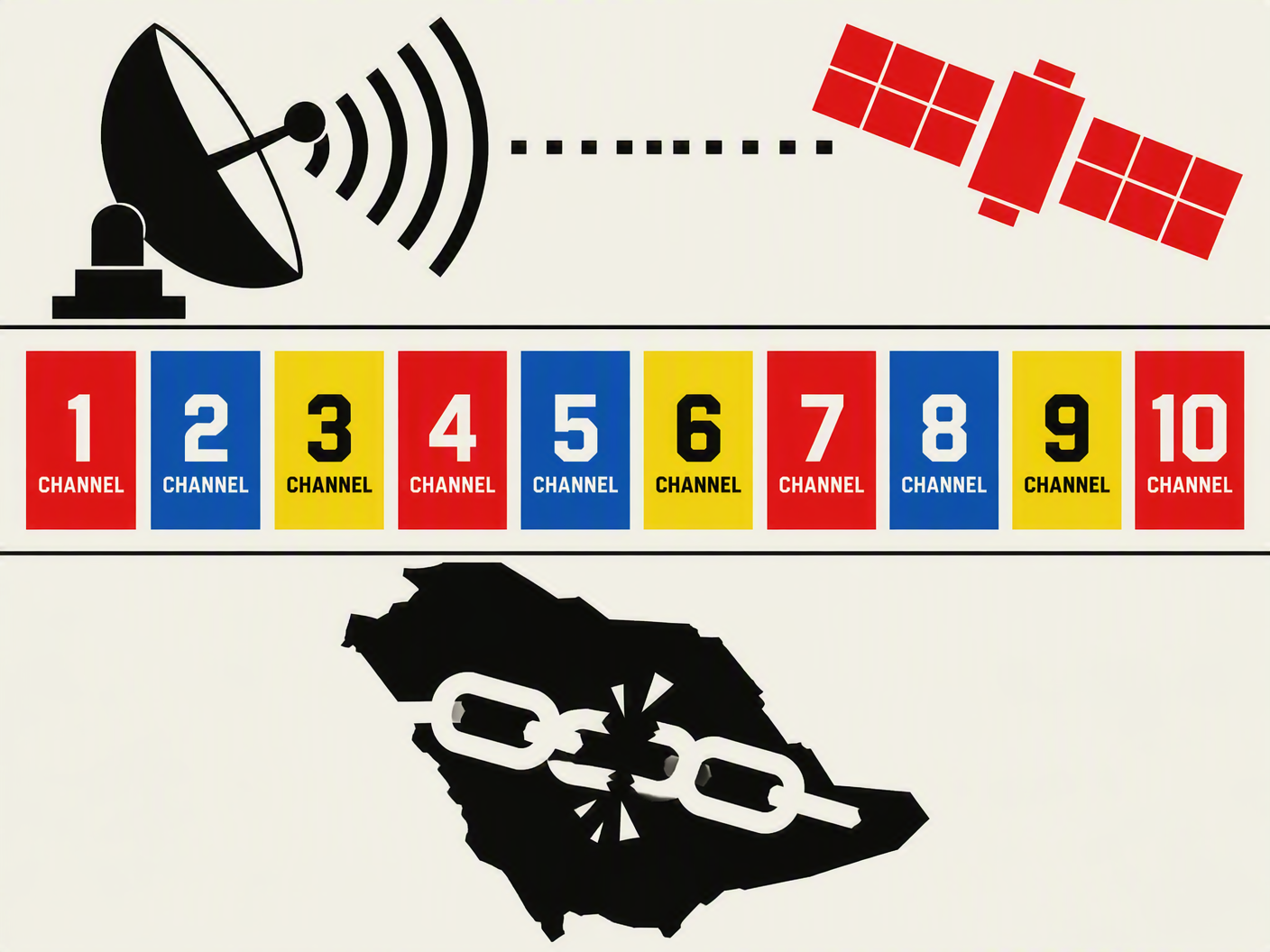
In June 2017, Saudi Arabia barred beIN Sports from selling subscriptions inside the country as the Qatar diplomatic crisis severed commercial and political ties. Within two months, a replacement service appeared. BeoutQ operated in Saudi Arabia from August 2017 until August 2019 as a pirate pay-television broadcaster, carrying sports programming that viewers had previously obtained through beIN, the Qatar-based rights holder. The commercial dispute acquired a second life on television: the country that had blocked beIN now hosted a service built around its programming.
BeoutQ did not function as a single illicit stream improvised for occasional matches. It distributed ten satellite channels, each carrying rebranded feeds of beIN Sports programming. The scale made the operation visible to rights holders, viewers, and sports federations across several markets. A subscription ban had changed the legal route to the broadcasts; beoutQ supplied an unauthorized route that preserved access to major competitions while removing beIN from the transaction.
The service transmitted through ArabSat satellites, linking the piracy dispute to a regional broadcasting network rather than to an isolated internet operator. ArabSat denied involvement. That denial remained central to the dispute because transmission infrastructure and editorial control were separate questions: the channels could be carried through a satellite system without the public record identifying every person who created, financed, or managed beoutQ. The broadcast signal was easier to trace than the ownership structure behind it.
By June 2018, beoutQ had reached the World Cup. The service was shown in Saudi Arabia after negotiations between beIN and Saudi broadcasters broke down, placing tournament coverage before viewers who had been cut off from the authorized broadcaster. The event widened the damage. A dispute that had begun with subscription access now affected one of football’s most valuable global broadcasts, while the stolen programming remained recognizable beneath its altered branding.
BeIN answered by identifying beoutQ as a piracy operation and pursuing complaints and legal action. The company’s exposure was not limited to lost subscriptions. Sports rights are assembled through contracts, territorial licenses, production agreements, and exclusivity clauses; unauthorized redistribution weakens each of those arrangements at once. When a broadcaster pays for the right to show a match and another service carries the same feed without paying, the injury moves through the entire rights chain.
Saudi regulators added pressure of their own. They fined beIN for competition-law violations and revoked the broadcaster’s license, measures that affected beIN’s ability to operate in the country even as beoutQ continued carrying its programming. The regulatory actions gave the dispute a second legal track. BeIN was contesting piracy while also facing official restrictions from the state in whose territory the unauthorized service was operating.
In July 2019, FIFA, the Asian Football Confederation, UEFA, the Bundesliga, La Liga, and Serie A issued a joint condemnation of beoutQ. The coalition crossed confederations, leagues, and national markets. Its target was not merely a website copying a match or an individual selling illegal access. The statement treated the service as a sustained commercial threat to the system by which broadcasters purchase and distribute sports rights.
The geographic question became more concrete two months later. On September 26, 2019, a documentary broadcast by Al Jazeera presented what it identified as beoutQ’s headquarters in Riyadh’s al-Qirawan district. The location claim shifted the dispute from satellite signals and corporate denials to a physical address in the Saudi capital. The operation ceased in August 2019, but the question of who had enabled it remained active after the channels disappeared.
The public dispute never produced a complete ownership chart naming every financier, manager, and operator behind beoutQ. Direct state ownership was not established. The service’s Saudi presence, its distribution of ten beIN channels, and its use of ArabSat-linked transmission were documented more clearly than its internal command structure. ArabSat continued to deny involvement, leaving the transmission allegation contested even as the broader piracy operation remained defined by its scale and location.
The World Trade Organization supplied the most consequential institutional response. In June 2020, its panel found evidence that beoutQ operated out of Saudi Arabia and that Saudi Arabia had obstructed beIN’s ability to obtain legal counsel in the country. The finding did not identify a private ownership chain or convert the dispute into a criminal prosecution. It did, however, place Saudi territory and official conduct inside an international trade proceeding concerning the protection of broadcast rights.
The commercial consequences continued beyond the service’s final broadcasts. BeIN later suspended Serie A broadcasts worldwide while seeking compensation, transferring the cost of the unresolved dispute from one rights market to viewers across all of them. A channel created to bypass an authorized broadcaster had therefore produced an international response: league condemnation, regulatory action, satellite denials, and a trade ruling addressing access to counsel.
What remained fixed was the operation itself. For two years, beoutQ carried rebranded beIN programming through ten satellite channels in Saudi Arabia, including World Cup coverage, while the institutions that controlled the rights attempted to stop it. What remained unsettled was the chain above the signal: who owned the service, who managed it, and how much official protection allowed it to continue. The WTO panel established Saudi operation. It did not supply the missing names.
Investigative Dossier & Evidence
Read the companion investigation notes, verified source claims, and primary documents.
Read the Companion Notes & Evidence Record →