
Tragedy ·
The Pitch That Fatally Struck Ray Chapman
Struck in the head at the Polo Grounds in August 1920, Cleveland’s shortstop died the next morning. Mays said the wet ball had sailed on him; players from the Red Sox and Tigers sought his banishment.
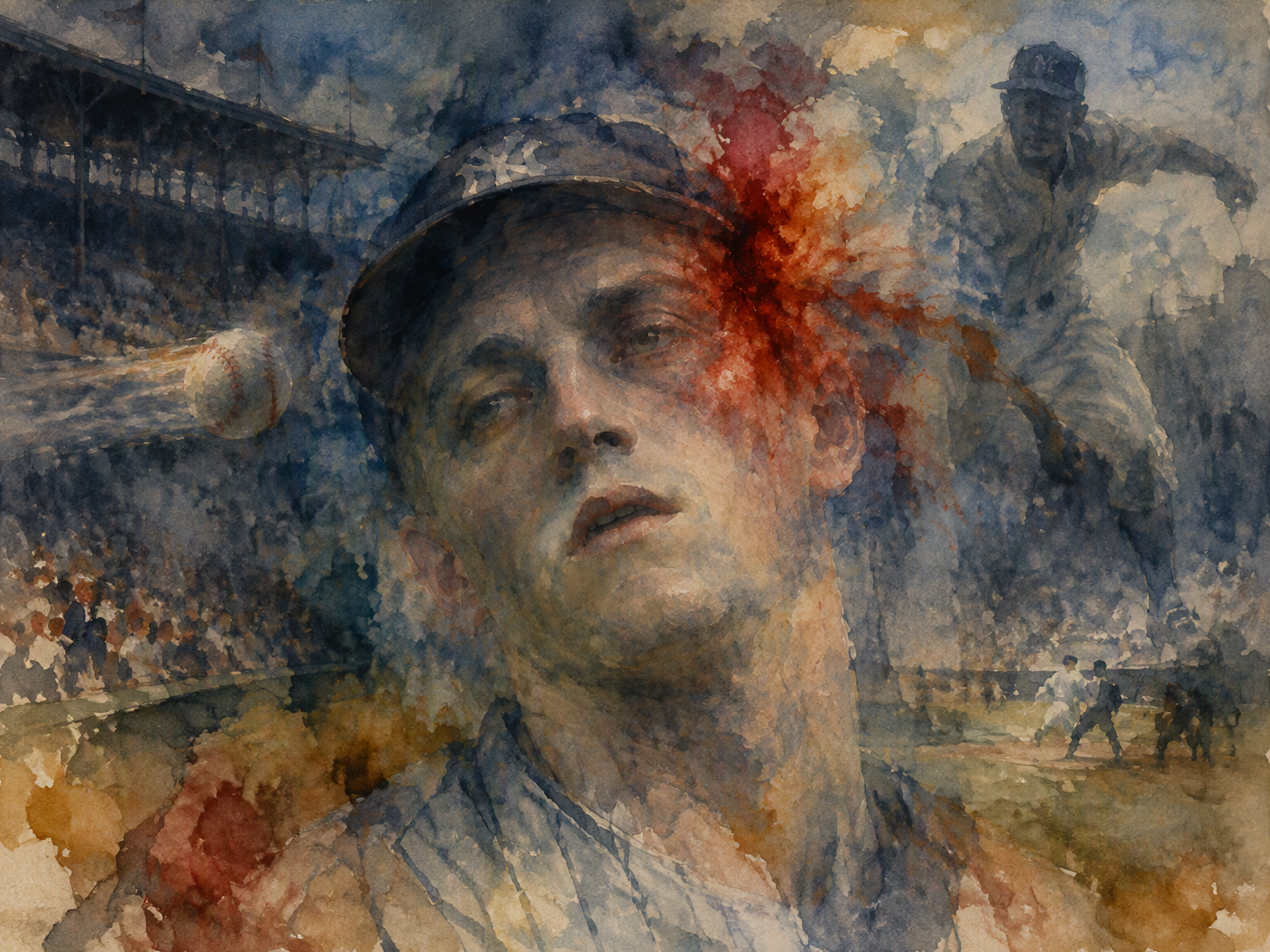
Carl Mays fielded the ball and threw to first base. He had mistaken the sound of it striking Ray Chapman’s head for the sound of a bat. It was the fifth inning at the Polo Grounds on August 16, 1920, and Cleveland’s shortstop had come up to lead off against the Yankees. The first pitch struck his temple. Chapman, who was not wearing a helmet, fell to the ground.
The umpire called for a physician. Chapman regained enough stability to leave home plate, with teammates helping him toward the clubhouse in center field, but collapsed again before reaching it. “Tell Mays not to worry,” he reportedly said before losing consciousness. An ambulance took him to St. Lawrence Hospital, where doctors diagnosed a depressed skull fracture.
The game continued, and Cleveland won, 4–3. Around midnight, doctors operated on Chapman’s skull, and he survived the surgery. Cleveland center fielder Tris Speaker contacted Chapman’s wife, Catharine, who hurried to New York but arrived too late. Chapman died early on August 17. He was 29, and the couple were expecting their first child.
Chapman had led the American League in runs and walks in 1918. His 52 stolen bases in 1917 would remain a Cleveland team record until 1980. He was also a celebrated bunter—a player whose work at the plate was not confined to trying to drive the ball past the fielders.
He played in an era when pitchers routinely altered baseballs with spit, dirt and other substances, and balls could become badly discolored during games. The spitball had already been outlawed before Chapman was struck, though 17 established practitioners were permitted to keep throwing it. Cleveland pitcher Stan Coveleski was among them. The ban was distinct from the protection Chapman lacked: Major League Baseball would not mandate batting helmets until 1971.
Mays, who had a reputation for hitting batters, contended that the baseball was wet and had sailed on him. “It is the most regrettable incident of my baseball career,” he said. “I would give anything if I could undo what has happened. Chapman was a game, splendid fellow.” Players from the Red Sox and Tigers petitioned American League President Ban Johnson to bar Mays from baseball. The New York district attorney investigated, ruled the incident an accident and filed no charges.
Speaker urged players to suppress bitter feelings. Johnson decided to take no action against Mays. Cleveland’s players returned home for Chapman’s funeral on Friday, August 20, at St. John’s Cathedral. Thousands filled the church or stood outside on Superior Avenue.