By 1931, ACWA president Sidney Hillman moved against the gangster influence that had penetrated sections of the New York garment trade. He first organized public pressure on Jimmy Walker, the notoriously corrupt Tammany Hall mayor, demanding action against racketeering in the garment district. Hillman then seized control of Cutters Local 4, expelled Beckerman and Orlofsky, and purged corrupt officials in Newark, New Jersey. The union escalated the campaign by striking manufacturers who subcontracted work to non-union or cut-rate contractors in Pennsylvania and New Jersey. During the dispute, Amalgamated pickets targeted trucks operated by Buchalter's companies, attempting to stop finished garments from being carried back into New York. The campaign cleaned up the union's internal structure and strengthened its opposition to sweatshop subcontracting, but it did not remove Buchalter from the clothing economy. The source leaves open the possibility that some form of accommodation may have existed between the union and the racketeer, while stressing that no evidence was found despite investigations and attacks by figures such as prosecutor Thomas Dewey and journalist Westbrook Pegler. The unresolved suspicion became part of the darker mythology of American labor history: a reformist union leader trying to impose industry-wide standards while confronting a criminal network that had embedded itself in trucking, subcontracting, factories, and union locals.
Preparing the daily feature…
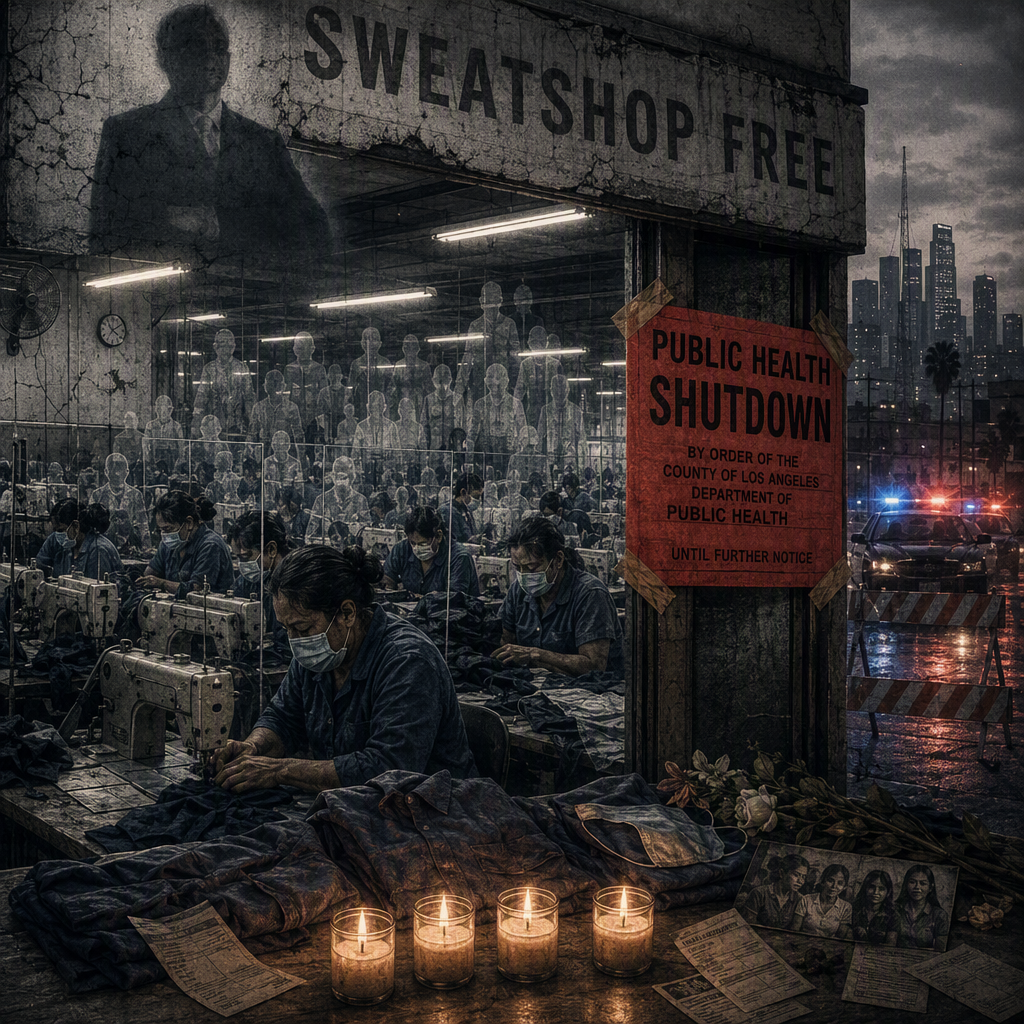 AI concept artwork
Archive Record · 1930s
Sidney Hillman's 1931 War on the Garment Racketeers
Amalgamated Clothing Workers of America, Sidney Hillman, Louis 'Lepke' Buchalter, Abraham Beckerman, and Philip Orlofsky / 1930s
By 1931, ACWA president Sidney Hillman moved against the gangster influence that had penetrated sections of the New York garment trade. He first organized public pressure on Jimmy Walker, the notoriously corrupt Tammany Hall mayor, demanding action against racketeering in the garment district. Hillman then seized control of Cutters Local 4, expelled Beckerman and Orlofsky, and purged corrupt officials in Newark, New Jersey. The union escalated the campaign by striking manufacturers who subcontracted work to non-union or cut-rate contractors in Pennsylvania and New Jersey. During the dispute, Amalgamated pickets targeted trucks operated by Buchalter's companies, attempting to stop finished garments from being carried back into New York. The campaign cleaned up the union's internal structure and strengthened its opposition to sweatshop subcontracting, but it did not remove Buchalter from the clothing economy. The source leaves open the possibility that some form of accommodation may have existed between the union and the racketeer, while stressing that no evidence was found despite investigations and attacks by figures such as prosecutor Thomas Dewey and journalist Westbrook Pegler. The unresolved suspicion became part of the darker mythology of American labor history: a reformist union leader trying to impose industry-wide standards while confronting a criminal network that had embedded itself in trucking, subcontracting, factories, and union locals.
The daily editorial is currently unavailable. There’s still an entire archive to explore.